How to Spot Fake News and Misinformation Online
Ever feel like you’re drowning in a digital sea of nonsense, where every headline is shouting for your attention but saying absolutely nothing? I remember sitting in my home office last Tuesday, staring at a “breaking news” notification that looked so convincing I actually felt my heart rate spike—only to realize five minutes later that the entire thing was a total fabrication. It’s frustrating because most experts make learning how to spot fake news sound like you need a PhD in data science or a subscription to ten different expensive fact-checking databases. Honestly, that approach is completely broken; it treats information literacy like an elite skill rather than a basic survival tool for our modern, hyper-connected lives.
I’m not here to give you a lecture or a list of academic theories that won’t work when you’re scrolling through your feed at 11 PM. Instead, I want to help you build a personal toolkit of simple, repeatable mental checks that turn truth-seeking into a seamless part of your daily routine. Think of it like debugging a piece of messy code; once you know which lines to look at, the errors become glaringly obvious. I promise to share the no-nonsense, practical strategies I use to filter the noise so you can navigate the digital world with confidence and clarity.
Table of Contents
Strengthening Your Digital Media Literacy Skills

Think of your brain like a piece of software that needs regular updates to stay secure. Just as I’d patch a bug in a line of code, you can sharpen your digital media literacy skills by changing how you interact with your feed. Instead of just scrolling and absorbing, try practicing lateral reading techniques. This means when you stumble upon a wild headline, don’t just stay on that page; open a new tab and see what other trusted sources are saying about the same topic. It’s like checking the blueprints before you start building—it saves you from a lot of structural headaches later.
I also love using a “toolbox” approach to verify information. Whenever something feels a bit off, I immediately pivot to my favorite fact checking websites to see if the story has already been debunked. It’s not about being cynical; it’s about being a smart investigator. By making a habit of performing a quick source credibility assessment before you hit that share button, you’re essentially installing a high-quality firewall for your mind, keeping the digital noise from cluttering up your reality.
Mastering Source Credibility Assessment Techniques
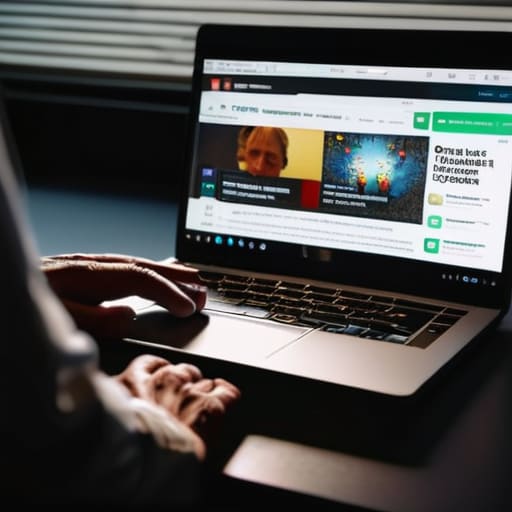
Think of source credibility assessment like checking the ingredients on a box of cereal; you wouldn’t just trust a bright, colorful package without looking at what’s actually inside, right? When I’m scrolling through my feed, I’ve learned to stop treating every headline like gospel. Instead, I use lateral reading techniques. This means instead of just staying on the page to see if it looks professional, I open a few new tabs to see what other trusted outlets are saying about that same claim. It’s like looking at a puzzle from different angles to see if the picture actually holds up.
Once you’ve opened those tabs, it’s time to play detective. I always keep a few reliable fact checking websites bookmarked—they’re basically my digital magnifying glasses. I’m looking for those tiny inconsistencies that scream “red flag,” such as extreme emotional language or a lack of primary citations. By shifting from a passive reader to an active investigator, you aren’t just consuming content; you’re mastering the art of verification in a world that’s constantly trying to rush your judgment.
My Personal Toolkit for Sorting Fact from Fiction
- Check the “vibe” of the headline. If it’s screaming at you in all caps or using supercharged emotional language just to get a click, my internal alarm bells start ringing. Real news usually delivers the facts without trying to trigger an immediate meltdown.
- Do a quick lateral search. I like to treat a suspicious claim like a glitchy piece of code—don’t just stare at it; open a new tab and see if other reputable outlets are reporting the same thing. If only one obscure blog is talking about it, that’s a massive red flag.
- Investigate the “About Us” page. It sounds tedious, I know, but sometimes these sites are just clever facades. I always look to see if there’s a real mission statement or if the site is just a collection of clickbait designed to farm ad revenue.
- Look past the shiny graphics. Misinformation often relies on doctored images or out-of-context photos to tell a story. I’ve learned to do a quick reverse image search to see if that “breaking news” photo is actually from a completely different event three years ago.
- Watch out for the echo chamber effect. We all have our biases, and it’s easy to believe something just because it aligns with what we already think. I try to pause and ask myself, “Am I believing this because it’s true, or because I want it to be true?”
Quick Wins for Your Digital Toolkit
Think like a detective, not a sponge; instead of absorbing every headline that crosses your feed, pause and look for those little jagged edges—the inconsistencies or missing context—that signal a piece of information doesn’t quite fit the puzzle.
Build a “trust layer” in your daily routine by diversifying your digital diet; just like you wouldn’t rely on a single sensor for a DIY automation project, don’t rely on a single algorithm to tell you what’s true.
Treat skepticism as a superpower rather than a burden; by slowing down your reaction time and verifying the source before you hit ‘share,’ you’re essentially debugging your own information stream.
## The Puzzle Piece Perspective
“Think of spotting fake news like a DIY automation project: you’re not just looking for what’s there, you’re looking for the glitches in the logic—the pieces that just don’t click into place with the rest of the truth.”
Jordan Bennett
Piecing the Truth Together

At the end of the day, spotting misinformation isn’t about being a professional detective; it’s about building a better mental toolkit. We’ve looked at how sharpening your media literacy and mastering source assessment can act like a filter for your digital life. Think of it as upgrading your internal software to better process the massive influx of data hitting your screen every single minute. By slowing down, checking those pesky inconsistencies, and questioning the motive behind a headline, you aren’t just consuming content—you are actively curating your own reality instead of letting an algorithm do it for you.
I know the digital landscape can feel like a chaotic, unsolvable maze sometimes, but I truly believe we have more power than we realize. Every time you pause to verify a claim before hitting that share button, you are adding a crucial piece to a much larger, more honest puzzle. Don’t let the noise drown out your ability to think critically. Stay curious, keep questioning, and remember that clarity is a skill you can practice every single day. You’ve got this, and honestly, the world needs your sharp eyes more than ever!
Frequently Asked Questions
What should I do if I realize I've already shared a piece of fake news with my friends or followers?
Oh, the dreaded “oops” moment. We’ve all been there—I once shared a “life-changing” productivity hack that turned out to be total nonsense! Don’t panic; it happens to the best of us. The best move? Own it quickly. Post a correction with a friendly, “Hey, I caught a mistake in my last post!” It shows integrity. Think of it like fixing a glitch in a piece of code—it’s not a failure, just a necessary patch to keep your system running smoothly.
Are there any specific apps or browser extensions that can help automate the fact-checking process for me?
Think of these tools as your digital sidekicks—they don’t do all the thinking for you, but they definitely help piece the puzzle together faster! I personally love using extensions like NewsGuard; it’s like having a little credibility meter right in your browser. For a quick reality check, Google’s Fact Check Explorer is a lifesaver. Just remember, even with automation, your own intuition is still the most important piece of the puzzle!
How can I tell the difference between a genuine mistake made by a journalist and an intentional piece of misinformation?
Think of it like a glitch in a piece of software versus a deliberate backdoor. A genuine mistake usually looks like a single, isolated error—a typo or a misattributed quote—that the outlet rushes to correct once flagged. Intentional misinformation, however, is a pattern. It’s a systemic attempt to tilt the narrative, often using emotionally charged language to trigger a reaction. If the “error” feels like it’s working too hard to make you angry, it’s probably not an accident.