
How to Build Wealth Slowly and Steadily
I was sitting in a cramped coffee shop last Tuesday, watching a “finfluencer” on my phone scream about some overnight crypto moonshot, and I honestly had to close the app just to catch my breath. It’s exhausting, isn’t it? The constant noise makes it feel like if you aren’t hitting a home run every single day, you’re somehow failing at life. But here’s the truth that the hype-train ignores: the most sustainable way to actually change your life is learning how to build wealth slowly. We’ve been conditioned to crave the lightning bolt, but real financial security isn’t a sudden explosion; it’s more like a slow-growing garden that requires consistent, tiny adjustments rather than one massive, risky shovel hit.
I’m not here to sell you a get-rich-quick scheme or a complex algorithm that requires a PhD to understand. Instead, I want to pull back the curtain on the systems that actually work. I’m going to share the practical, bite-sized strategies I’ve gathered from years of optimizing workflows and analyzing complex patterns to show you how to piece your financial future together. We are going to focus on small, repeatable wins that turn into a massive, solid foundation over time.
Table of Contents
Mastering Compound Interest Explained for Steady Growth

Think of compound interest as that one DIY automation project that takes a little while to set up but eventually runs entirely on its own in the background. When we talk about compound interest explained in simple terms, it’s really just your money making babies, and then those babies having babies of their own. Instead of just earning interest on your initial deposit, you’re earning interest on the interest you’ve already accumulated. It’s a bit like a snowball rolling down a hill; it starts small and slow, but as it picks up more snow, its momentum becomes almost unstoppable.
The trick here isn’t about finding a “get rich quick” hack—I’ve seen enough code to know there are no shortcuts to a stable system. Instead, it’s about patience and consistency. By integrating small, regular contributions into your long term financial planning, you allow time to do the heavy lifting for you. You don’t need to be a Wall Street wizard; you just need to give your money enough runway to let that mathematical magic happen. It’s the ultimate way to let your hard work multiply while you sleep.
Frugal Living for Wealth Small Pieces Big Picture

I used to think that being “frugal” meant living a life of deprivation—sort of like running a computer on low-power mode just to keep the battery from dying. But after years of looking at systems, I’ve realized that frugal living for wealth isn’t about saying “no” to everything fun; it’s about optimizing your outflows so your inflows can actually do some heavy lifting. Think of it like streamlining a messy piece of code. When you cut out the bloat—those mindless subscriptions or the daily impulse buys that don’t actually add value—you aren’t just saving pennies. You are reclaiming the fuel needed to power your future.
Every dollar you decide not to waste is a tiny, invisible worker that you can eventually send out to earn more for you. When you redirect those small savings into your retirement savings habits, you are essentially building a foundation that supports much larger structures later on. It’s about shifting your mindset from “how much can I spend today?” to “how much can I put to work for tomorrow?” It’s a small, intentional tweak in your daily routine that makes the entire puzzle of financial freedom much easier to solve.
Small Tweaks, Big Wins: 5 Ways to Keep Your Momentum
- Automate your savings like a background script. Just like how I set up my smart lights to turn on without me thinking about it, you should set your bank to move a portion of your paycheck into savings or investments automatically. If you don’t see the money, you won’t miss it, and the “system” builds wealth while you’re busy living your life.
- Treat your “fun money” like a fixed budget. I used to think I had to cut out everything I loved to save money, but that’s a recipe for burnout. Instead, give yourself a set amount for hobbies or coffee runs. It’s about creating a sustainable loop rather than a crash-and-burn cycle.
- Upgrade your skills to increase your “input.” Think of your career as a piece of software; occasional updates are necessary to stay efficient. Investing in a certification or a new skill isn’t just about work—it’s about increasing your capacity to earn, which gives you more pieces to add to your wealth puzzle.
- Avoid the “lifestyle creep” glitch. It’s so easy to celebrate a raise by upgrading your car or moving to a fancier apartment, but that’s like adding more code to a system without optimizing the core. Try to keep your living expenses steady even as your income climbs, and redirect that extra “bandwidth” toward your long-term goals.
- Diversify your toolkit. You wouldn’t rely on a single line of code to run an entire enterprise, right? The same goes for your money. Spreading your investments across different areas—like index funds, real estate, or even a high-yield savings account—ensures that if one piece of the puzzle shifts, the whole picture doesn’t fall apart.
The Big Picture: My Three Golden Rules for the Long Game
Think of your money like a DIY automation project; it’s not about the flashy, complicated setups, but about the small, consistent habits that run quietly in the background to build momentum over time.
Don’t get caught in the “all or nothing” trap—wealth building is much more about finding those tiny, manageable pieces of the puzzle that fit into your current lifestyle rather than trying to overhaul your entire life overnight.
Protect your progress by focusing on the gap between what you earn and what you spend, treating that extra space as the essential fuel that keeps your long-term growth engine humming.
## The Beauty of the Slow Build
“Think of building wealth less like a high-stakes sprint and more like a DIY automation project; it’s not about the flashy, overnight fix, but about setting up those small, consistent systems that quietly work in the background while you’re actually living your life.”
Jordan Bennett
The Big Picture
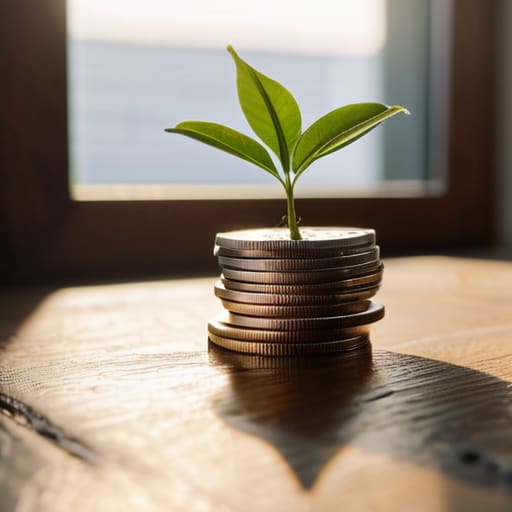
Looking back at everything we’ve covered, it’s easy to see that building wealth isn’t some mysterious, overnight magic trick. It’s actually much more like one of those DIY automation projects I love—it’s about setting up the right systems and letting them run in the background. By leaning into the power of compound interest and being intentional with your daily spending, you aren’t just saving money; you are architecting your freedom. You’ve learned that it’s not about making one massive, terrifying investment, but about the consistent, small wins that eventually stack up into something unstoppable.
I know that staring at a long-term financial goal can sometimes feel like looking at a thousand-piece puzzle with no box lid to guide you. It can feel overwhelming, and honestly, a little intimidating. But remember, you don’t have to solve the whole thing by tonight. Just focus on finding the next piece, placing it carefully, and trusting the process. If you keep showing up and making these small, smart adjustments, I promise you’ll look back in a few years and realize you’ve built something truly incredible. You’ve got this!
Frequently Asked Questions
How do I actually start investing if I feel like my monthly budget is already stretched too thin?
I totally get that feeling—it’s like trying to find an extra piece for a puzzle when you think the box is already empty. Honestly, don’t wait for a “surplus” that might never come. Start with micro-investing. Even $5 or $10 a week via an automated app acts like a tiny gear in a much larger machine. It’s about building the habit of movement, not the size of the initial leap.
Is there a way to automate my savings without feeling like I'm constantly depriving myself of the things I enjoy?
Oh, I’ve been there! It’s that classic tug-of-war between “Future Me” and “Present Me.” The secret is to stop treating savings like a punishment and start treating it like a background process. Set up automatic transfers to your savings the day your paycheck hits. By automating the “boring” stuff, you remove the decision fatigue and the guilt. Whatever is left in your checking account is yours to spend guilt-free!
How do I know if I'm making progress, or am I just spinning my wheels in the slow lane?
It’s so easy to feel like you’re running on a treadmill when you’re playing the long game. To see if you’re actually moving, stop looking at the big, scary numbers and start tracking your “micro-wins.” Are you automating more of your savings? Is your debt-to-income ratio shrinking? If your systems are becoming more seamless and your net worth is ticking up—even by a few dollars—the gears are turning. You aren’t spinning; you’re building momentum.